
Should You Put Salt on Your Driveway in Winter?
Should You Put Salt on Your Driveway in Winter?
Short answer: No. Never.
Long answer: keep reading—because this one decision can quietly damage your driveway, your home, and even the environment.
Why People Use Salt in the First Place
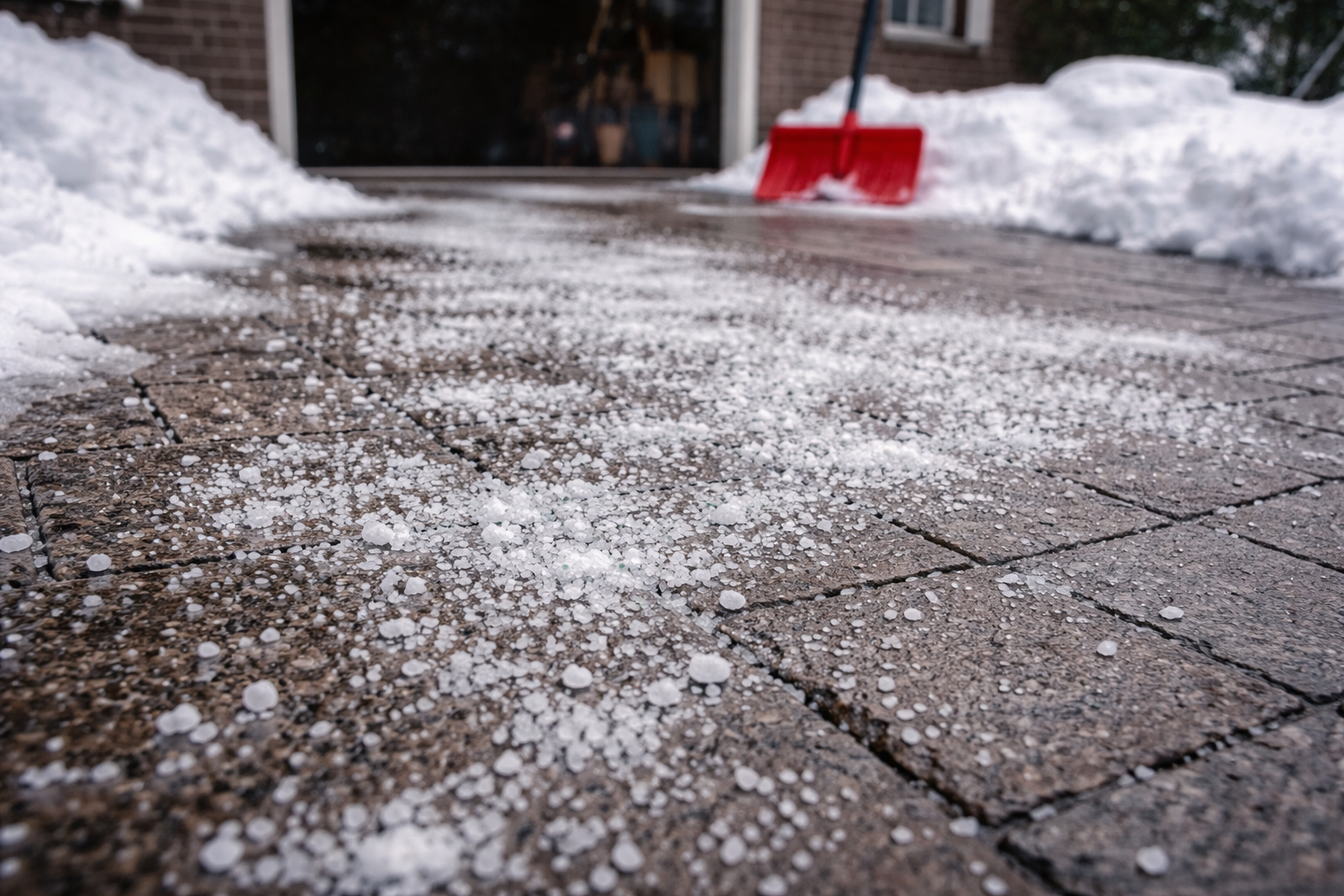
Rock salt (typically sodium chloride) is commonly spread on driveways and walkways to:
Melt ice by lowering the freezing point of water
Improve traction quickly
Reduce slip hazards
It feels like the responsible thing to do in the moment. Unfortunately, it creates long-term problems that most homeowners don’t see until years later.
What Salt Actually Does to a Driveway
1. It Damages Concrete
Concrete is porous. When salt dissolves, it seeps into the surface. As temperatures rise and fall, moisture inside the concrete freezes and expands.
That leads to:
Surface scaling and flaking
Pitting
Cracks that grow larger over time
Once concrete starts to deteriorate, it doesn’t heal—it only accelerates.
2. It’s Especially Hard on New Concrete
New concrete continues curing for months, even after it looks finished. Salt exposure during this period:
Weakens the surface
Causes premature scaling
Can permanently reduce the lifespan of the slab
Most concrete manufacturers and installers recommend no salt for at least the first winter, and many advise avoiding it entirely.
3. It Damages Asphalt Too
Salt doesn’t play nicely with asphalt either. It:
Breaks down binders
Speeds up cracking
Increases pothole formation
Asphalt already expands and contracts significantly in winter—salt just speeds up the wear.
4. It Attacks Nearby Materials
Salt doesn’t stay where you put it.
It gets tracked into:
Garages (leading to rust on vehicles)
Homes (damaging flooring)
Landscaping (killing grass, shrubs, and trees)
It can also corrode:
Metal railings
Door thresholds
Fasteners and structural connectors
5. It’s Bad for the Environment
Salt runoff ends up in:
Soil
Groundwater
Lakes and streams
Once salt enters the ecosystem, it doesn’t break down. It accumulates—and damages plant life and water quality over time.
“But What About Safety?”
This is the big concern—and it’s valid. Slips are no joke. The good news? You have better options.
Safer Alternatives to Salt
Sand or grit – Improves traction without chemical damage
Calcium magnesium acetate (CMA) – Less harmful, but still best used sparingly
Snow removal first – Shovel or plow early before snow packs down into ice
Good drainage and slope – Prevents refreezing in the first place
(Pro tip: the best winter driveway strategy is thoughtful design before winter ever arrives.)
Our Professional Recommendation
From a builder’s perspective—after seeing hundreds of driveways over decades—the guidance is simple:
Do not put salt on your driveway. Ever.
The short-term convenience isn’t worth:
Shortened driveway life
Costly repairs
Hidden structural damage
Environmental harm
A well-built driveway is an investment. Treat it like one.
Final Takeaway
If you want your driveway to:
Look better, longer
Last decades instead of years
Avoid unnecessary repair costs
Skip the salt. Grab a shovel, use traction materials, and let smart design do the heavy lifting.
Your driveway will thank you. And so will Future You.
FOLLOW US ON SOCIAL





Change orders aren’t always a bad thing—but they can cause budget and schedule stress if they aren’t managed correctly. Here’s what change orders really mean, what triggers them, and how a great builder keeps them under control.