

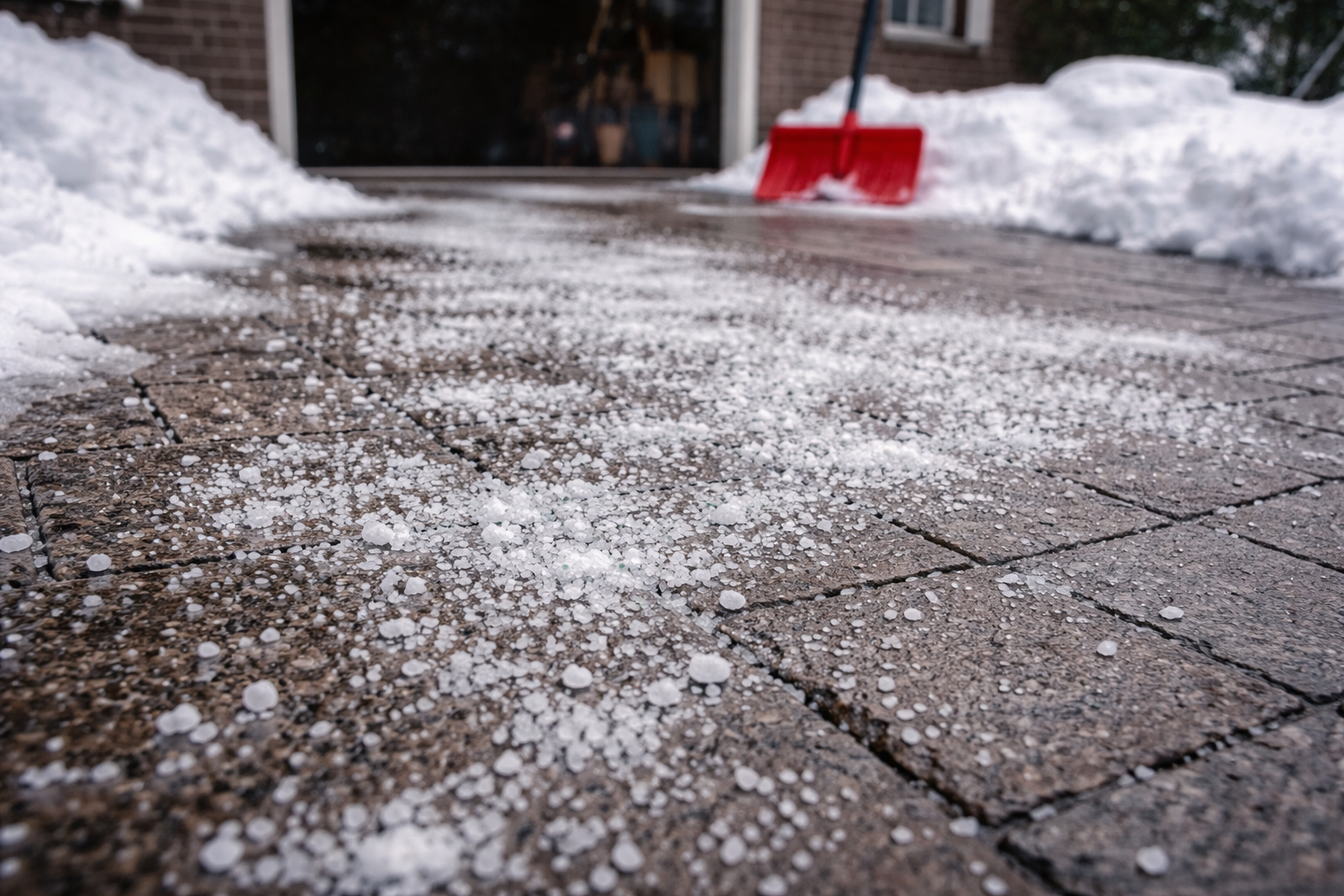
Should You Put Salt on Your Driveway in Winter?
Salt may melt ice fast, but it can quietly destroy your driveway over time. Here’s why we recommend never using salt—and what to use instead.
Should You Put Salt on Your Driveway in Winter?
Short answer: No. Never.
Long answer: keep reading—because this one decision can quietly damage your driveway, your home, and even the environment.
Why People Use Salt in the First Place
Rock salt (typically sodium chloride) is commonly spread on driveways and walkways to:
Melt ice by lowering the freezing point of water
Improve traction quickly
Reduce slip hazards
It feels like the responsible thing to do in the moment. Unfortunately, it creates long-term problems that most homeowners don’t see until years later.
What Salt Actually Does to a Driveway
1. It Damages Concrete
Concrete is porous. When salt dissolves, it seeps into the surface. As temperatures rise and fall, moisture inside the concrete freezes and expands.
That leads to:
Surface scaling and flaking
Pitting
Cracks that grow larger over time
Once concrete starts to deteriorate, it doesn’t heal—it only accelerates.
2. It’s Especially Hard on New Concrete
New concrete continues curing for months, even after it looks finished. Salt exposure during this period:
Weakens the surface
Causes premature scaling
Can permanently reduce the lifespan of the slab
Most concrete manufacturers and installers recommend no salt for at least the first winter, and many advise avoiding it entirely.
3. It Damages Asphalt Too
Salt doesn’t play nicely with asphalt either. It:
Breaks down binders
Speeds up cracking
Increases pothole formation
Asphalt already expands and contracts significantly in winter—salt just speeds up the wear.
4. It Attacks Nearby Materials
Salt doesn’t stay where you put it.
It gets tracked into:
Garages (leading to rust on vehicles)
Homes (damaging flooring)
Landscaping (killing grass, shrubs, and trees)
It can also corrode:
Metal railings
Door thresholds
Fasteners and structural connectors
5. It’s Bad for the Environment
Salt runoff ends up in:
Soil
Groundwater
Lakes and streams
Once salt enters the ecosystem, it doesn’t break down. It accumulates—and damages plant life and water quality over time.
“But What About Safety?”
This is the big concern—and it’s valid. Slips are no joke. The good news? You have better options.
Safer Alternatives to Salt
Sand or grit – Improves traction without chemical damage
Calcium magnesium acetate (CMA) – Less harmful, but still best used sparingly
Snow removal first – Shovel or plow early before snow packs down into ice
Good drainage and slope – Prevents refreezing in the first place
(Pro tip: the best winter driveway strategy is thoughtful design before winter ever arrives.)
Our Professional Recommendation
From a builder’s perspective—after seeing hundreds of driveways over decades—the guidance is simple:
Do not put salt on your driveway. Ever.
The short-term convenience isn’t worth:
Shortened driveway life
Costly repairs
Hidden structural damage
Environmental harm
A well-built driveway is an investment. Treat it like one.
Final Takeaway
If you want your driveway to:
Look better, longer
Last decades instead of years
Avoid unnecessary repair costs
Skip the salt. Grab a shovel, use traction materials, and let smart design do the heavy lifting.
Your driveway will thank you. And so will Future You.
FOLLOW US ON SOCIAL






Window Condensation Explained
Seeing condensation on your windows? It’s often normal in winter, especially in energy-efficient homes. Learn when it’s harmless—and when it’s a sign to investigate further.
Window Condensation Explained: What’s Normal, What’s Not, and When to Be Concerned
Condensation on windows is one of the most common questions homeowners ask—especially during colder months. If you’re seeing moisture on your windows, don’t panic. In many cases, condensation is a sign your home and windows are performing exactly as designed.
This guide explains:
Why window condensation happens
When it’s normal
When it’s a problem
What you can do to manage it
What Causes Condensation on Windows?
Condensation forms when warm, moisture-filled indoor air meets a colder surface, such as window glass in winter. When the air cools quickly, it releases moisture in the form of water droplets.
Modern homes—especially custom, energy-efficient homes—are built to be:
Airtight
Well insulated
Energy efficient
That’s great for comfort and efficiency, but it also means moisture stays inside longer than it did in older homes.
Why Condensation Is Common in New, Energy-Efficient Homes
New windows and tight building envelopes reduce drafts and heat loss. Because less warm air escapes, interior glass surfaces can remain cooler, making condensation more visible.
Daily activities add surprising amounts of moisture to your home:
Cooking
Showering
Laundry
Even breathing
In winter, that moisture has fewer escape paths, so it often shows up on windows first.
👉 Condensation does not mean your windows are failing.
It often means your home is sealed and insulated well.
Types of Window Condensation (And What They Mean)
Interior Window Condensation
Usually normal
Most common in winter and often appears:
Overnight
In bathrooms or kitchens
On north-facing windows
✔ Clears during the day
✔ Light moisture
✔ No damage
This is typically not a concern.
Exterior Window Condensation
A good sign
Moisture on the outside of windows usually occurs when:
Outdoor air warms faster than the glass
Windows are highly energy efficient
This indicates your windows are keeping heat inside where it belongs.
Condensation Between Window Panes
Cause for concern
If moisture appears between panes of glass:
The insulated seal has failed
Performance is reduced
Moisture will not clear on its own
This typically requires professional evaluation and repair.
When Should You Be Concerned About Window Condensation?
You should investigate further if condensation:
Is persistent and heavy
Causes water pooling on sills
Leads to peeling paint or wood damage
Is associated with mold or mildew
Appears between panes of glass
These conditions may indicate high indoor humidity or ventilation issues—not poor construction, but something that needs adjustment.
How to Reduce Interior Window Condensation
Improve Air Circulation
Open blinds and curtains during the day
Allow warm air to reach window surfaces
Control Indoor Humidity
Use kitchen and bathroom exhaust fans
Run fans during and after showers
Avoid overusing humidifiers in winter
Monitor Humidity Levels
Ideal winter indoor humidity: 25–35%
Use a hygrometer to track levels accurately
Manage Moisture Sources
Cover pots while cooking
Vent dryers outdoors
Ensure ventilation systems are operating properly
Final Thoughts for Homeowners
Window condensation is a normal part of living in a high-performance home—especially during seasonal temperature swings. Understanding the difference between normal moisture and warning signs helps protect your home and gives peace of mind.
If you ever have questions, addressing them early is always the best approach.
Frequently Asked Questions About Window Condensation
-
Yes, in many cases it is. Light condensation on the interior of windows during colder months is common—especially in newer, energy-efficient homes. It often appears overnight and clears as the home warms during the day.
-
In winter, the glass surface of windows becomes much colder while indoor air stays warm and holds moisture. When that warm, humid air touches the cold glass, condensation forms. The bigger the temperature difference, the more likely condensation becomes.
-
New homes are built tighter and better insulated than older homes. While this improves comfort and efficiency, it also means moisture created by everyday living—showers, cooking, laundry, and even breathing—stays inside longer instead of escaping through drafts.
-
A good target range for winter is typically 25–35% indoor relative humidity. When outdoor temperatures drop significantly, indoor humidity may need to be on the lower end of that range to help reduce condensation.
-
No. Exterior condensation is usually a good sign. It often means your windows are insulating well and keeping warm air inside your home. This typically happens when outdoor air warms quickly while the glass remains cool.
-
You should look closer if condensation:
Is heavy and persistent
Causes water pooling on window sills
Leads to peeling paint or swelling wood
Is accompanied by musty smells or mold
Appears between the panes of glass
These signs suggest humidity or ventilation issues that should be addressed.
-
Condensation or fogging between panes usually indicates a failed seal in the insulated glass unit. Moisture is trapped inside the glass and typically will not clear on its own. This situation should be evaluated by a professional.
-
Simple steps often help:
Use kitchen and bathroom exhaust fans during and after use
Improve air circulation near windows
Open blinds and curtains during cold spells
Avoid overusing humidifiers in winter
Monitor indoor humidity with a hygrometer
-
Not necessarily. In most cases, condensation is related to indoor humidity and airflow—not a window defect. Only condensation between panes typically indicates a window performance issue.
Builder’s Perspective:
In a well-built, high-performance home, the goal is comfort and efficiency—meaning less air leakage and better insulation. That tighter envelope can make seasonal condensation more noticeable, especially during cold snaps. Most of the time, it’s not a window problem—it’s a humidity/airflow balance issue. If it’s heavy, persistent, or showing up between panes, we want to know early so we can help you address it before it affects trim, finishes, or indoor air quality.






Change orders aren’t always a bad thing—but they can cause budget and schedule stress if they aren’t managed correctly. Here’s what change orders really mean, what triggers them, and how a great builder keeps them under control.